
Ecological, neurodiversity-affirming practice for early childhood
Every child communicates. Every child belongs.
Embarkia® brings together research-informed frameworks, professional learning and thoughtfully designed tools to support more inclusive early childhood practice.We look beyond behaviour in isolation and become curious about the wider ecology surrounding the child: relationships, communication, sensory experiences, environments, expectations and opportunities for participation.Because inclusion isn't simply about helping children fit the environments we create.
It is about becoming better at noticing what those environments are asking of them.

About Embarkia®

Founder, Embarkia®
Early Years specialist, SEND specialist. Experienced education leader.
PhD researcher in early childhood education.
Embarkia® grew from professional curiosity.
What becomes possible when we stop looking at children's communication, engagement and behaviour as things that exist only within the child, and begin paying closer attention to the relationships, environments and experiences surrounding them?Founded by early childhood specialist and researcher Melanie Yates-Boothby, Embarkia brings together research, professional practice and thoughtfully designed technology to explore that question in practical ways.Our work is informed by early childhood research and developed through an ecological, relational, rights-based and neurodiversity-affirming lens.We create frameworks, tools and professional learning that support adults to notice carefully, reflect meaningfully and make responsive adjustments without reducing children's experiences to labels, deficits or isolated behaviours.
Belonging by Design
We believe inclusion should not depend upon a child's ability to successfully adapt to environments and systems that were not designed with them in mind.Our ambition is not to create another layer of paperwork around inclusion.It is to help make inclusion more thoughtful, responsive and possible in everyday practice.
Embarkia® Tools & Frameworks
Practical, research-informed resources that support professional noticing, reflection and responsive practice. Embarkia tools are introduced through professional learning, partnership work and selected resources as they are developed and evaluated.


A different way of noticing
Children do not communicate, participate or develop in isolation.Their experiences are shaped by relationships, environments, sensory conditions, expectations, rhythms, opportunities and the systems surrounding them.Embarkia® takes an ecological approach.Rather than asking only 'What is happening with this child?', we invite adults to become curious about what is happening around, between and with them.This shift matters.It can move professional thinking away from isolated behaviours and deficits towards communication, context, participation and responsive adjustment.Our work is relational, rights-based and neurodiversity-affirming. It is designed to support professional curiosity, strengthen inclusive practice and help create environments in which more children can participate, connect and belong.
Our principles
Relational practice
Relationships are not separate from learning and development. They are part of the conditions through which children experience them.
Communication ecology
Communication extends beyond speech. We pay attention to the many ways children express preference, connection, uncertainty, interest and meaning.
Sensory-affirming environments
We consider how environments are experienced, rather than assuming the same environment is equally accessible to everyone.
Rights-based participation
Children's perspectives matter, including when those perspectives are communicated without words.
Responsive practice
Observation should deepen understanding and inform meaningful adjustment, not simply generate more documentation.
Ethical sustainability
We consider the human, relational, digital, material and environmental impact of the things we design.
Neurodiversity-Affirming by Design
At Embarkia, neurodiversity-affirming practice is not an additional intervention or programme. It influences how we observe, document, communicate, design environments and interpret children's experiences.Our tools are developed to support curiosity rather than correction, accommodation rather than conformity, and understanding rather than assumptions about what behaviour should look like.We recognise communication in its many forms and seek to preserve autonomy, dignity and participation throughout assessment, reflection and support.


The Embarkia® Listening Ecology Framework
Children communicate continuously, through words, movement, proximity, interaction, sensory responses, participation, withdrawal, rhythm and play.The Embarkia® Listening Ecology Framework is being developed as a structured, reflective approach to noticing those communications within the wider ecology surrounding a child.Rather than locating difficulty solely within the child, the framework invites consideration of relationships, environments, expectations, sensory experiences and opportunities for participation.It is designed to support professional curiosity, collaborative reflection and responsive change, without reducing children's experiences to a checklist or score.The Embarkia® Listening Ecology Framework is currently in development and will be available through Embarkia professional learning and partnership.
The aim is not simply to notice more, but to turn noticing into meaningful environmental, relational and practice change.
Sustainability is part of the design

Our understanding of ecology extends to the way Embarkia itself operates.We are working towards carbon-neutral operation by 2031 through measurement, genuine emissions reduction and transparent annual reporting. We also consider the environmental impact of travel, procurement, materials, digital infrastructure and emerging technologies.
What others say
“Melanie’s work helped me see my daughter’s communication in a completely new way. The pilot opened conversations we had never had before, even though we talk daily about school and wellbeing. Melanie captured her beautiful ways with such care and accuracy that it moved me to tears. I felt she truly saw and understood her. The reports were clear, compassionate and respectful of both home and school experiences. This work has been invaluable for helping others understand my daughter and for supporting her transition. We felt listened to, supported and included throughout.”

Parent testimonial (Deb E)
“I have had the privilege of working alongside Melanie over a number of years, and she is genuinely one of those practitioners who stays with you. Her commitment to ensuring every child feels understood, heard and valued is unwavering. Melanie sees children as unique individuals with their own ways of experiencing the world, and her neurodiversity‑affirming approach is simply who she is. She creates environments where all children can thrive, and her reflective, collaborative practice makes a lasting difference to the children, families and professionals she works with. I have no doubt she will inspire and empower many more educators through Embarkia.”

Professional testimonial (Rachael W)
Designed with care
The Embarkia® Ethical Design Principles
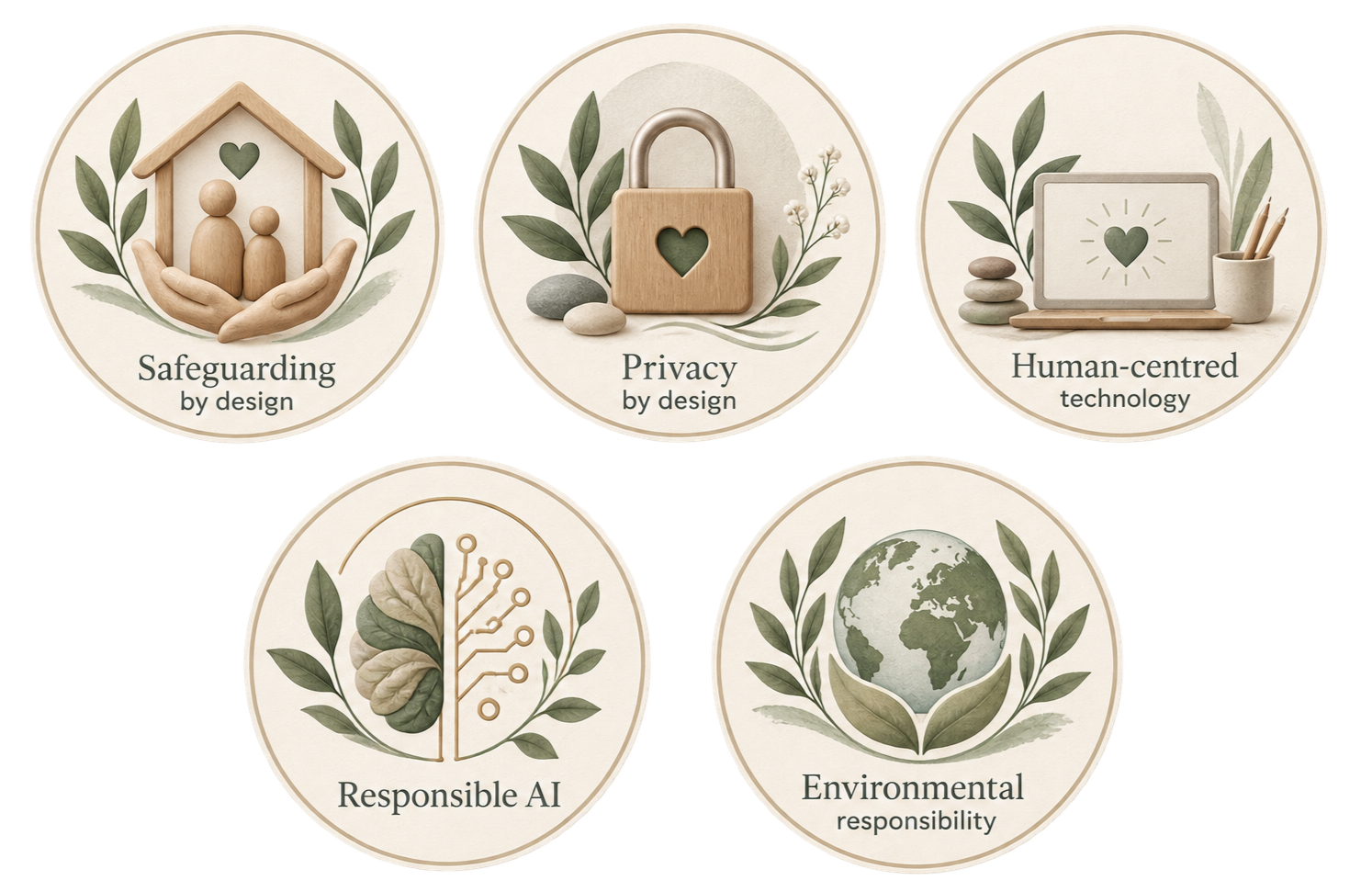
Embarkia's approach to ethical design extends beyond the tools we create.Safeguarding by designPrivacy by design
We design systems involving children and families around data minimisation, transparency, safeguarding and appropriate control.Human-centred technology
Technology should support professional thinking and human relationships, not replace them.Responsible AI
Where AI is used within Embarkia, its role, limitations and appropriate use will be made clear.
Our carbon-neutral pathway
Environmental responsibilityEmbarkia® has set a target of achieving carbon-neutral operations by 2031.Beginning with our first operational year, we will measure our business emissions, prioritise genuine reductions and publish our progress transparently.Our approach will evolve as Embarkia grows, including consideration of travel, procurement, materials, digital infrastructure and the technologies we use.Where residual emissions cannot reasonably be eliminated, we will report these transparently and explain any credible measures used to address them.
Baseline year: 2026–27
Target: carbon-neutral operation by 2031
Progress reporting: annually
Stay close to EmbarkiaFollow the development of Embarkia®, new research, professional thinking and early access opportunities.
Embarkia® | Belonging by Design© 2026 Melanie Yates-Boothby trading as Embarkia®. All rights reserved. Embarkia® is a registered trade mark.Privacy & Data Protection | Safeguarding | Accessibility | Ethical Design | Carbon-Neutral Pathway
Work with Embarkia®

Creating the conditions for participation, connection and belonging
Embarkia® works alongside settings, organisations, families and research partners to explore what inclusion looks and feels like in practice.Our work is relational, reflective and evidence-informed. Rather than applying a fixed programme, we begin by listening, noticing and understanding the ecology around children, families and the adults who support them.
Settings & organisations
Professional learning
Bespoke CPD for settings and teams, including neurodiversity-affirming practice, communication, observation, relational pedagogy and inclusive environments.Setting Review & Consultancy
Reflective review and consultancy exploring communication, participation, sensory experience, environment and inclusive practice.Partnership Support
Longer-term collaborative work for settings wanting to develop and embed practice over time.
Families & communities
Accessible opportunities to build understanding, confidence and advocacy around neurodiversity-affirming support.
Research & collaboration
Research-informed development, collaborative enquiry, evaluation and opportunities to explore emerging Embarkia frameworks and tools.
Not sure where to begin?
You don't need to arrive with a solution. If something in Embarkia's work connects with a question, challenge or possibility you're exploring, start a conversation.
Start a conversation
Have a question, an idea, or wondering whether Embarkia could support your setting, organisation or work? Tell me a little about what you're exploring.
Your information will only be used to respond to your enquiry and handled in accordance with Embarkia's Privacy & Data Protection information.
Start a conversation
Have a question, an idea, or wondering whether Embarkia could support your setting, organisation or work? Tell me a little about what you're exploring.
Your information will only be used to respond to your enquiry and handled in accordance with Embarkia's Privacy & Data Protection information.
Embarkia Tools
Thoughtfully designed. Evidence-informed. Developing with care.
Embarkia® is developing a growing collection of practical tools and digital resources to support more relational, communication-rich and neurodiversity-affirming practice.Our tools are being developed iteratively, bringing together research, professional knowledge and real-world insight. They will be introduced gradually as they are tested, refined and ready to use.
Supporting communication to be recognised, understood and valued in its many forms.
Embarkia reflective tools
Practical resources supporting sensory, environmental, communication and relational reflection.
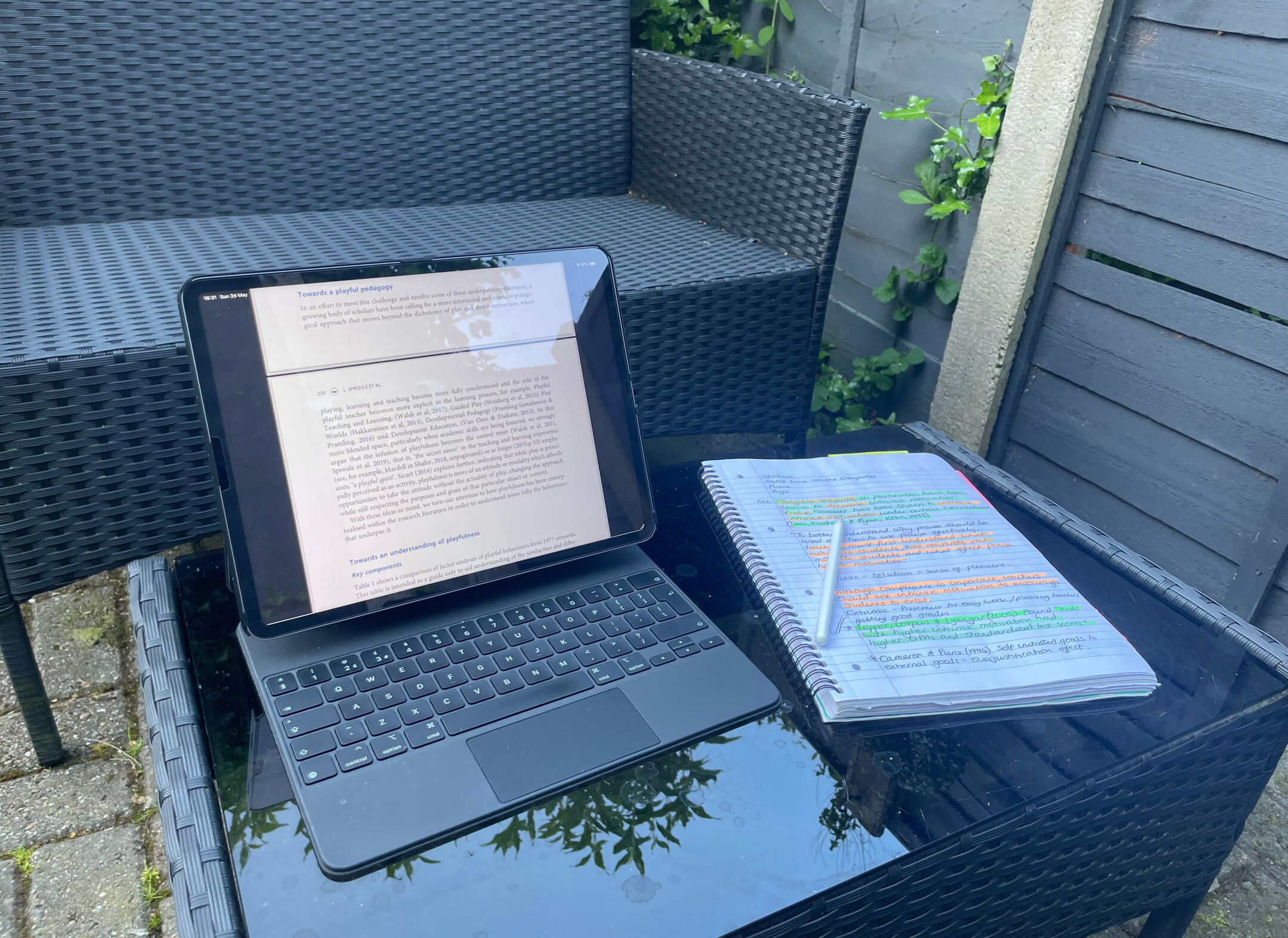
We're building carefully, not quickly. Early Access members will be among the first to hear about opportunities to explore and help shape emerging Embarkia tools.
Privacy & Data Protection
Last updated: August 2026
Embarkia® is committed to handling personal information carefully, transparently and only where there is a clear reason to do so.Embarkia® is currently operated by Melanie Yates-Boothby, trading as Embarkia®, who is the data controller for personal information collected through this website and associated Embarkia services.For questions about how your information is used, please contact [email protected]
Information Embarkia may collect
Depending on how you interact with Embarkia, this may include:your name and email address;
the name of your setting or organisation;
information you choose to provide when making an enquiry;
your mailing-list or early-access preferences;
information necessary to provide a service you have requested; and
limited technical information generated through use of the website or associated services.Please do not include sensitive personal information about children or other individuals in the website contact form.
How your information is used
Personal information may be used to:respond to enquiries and conversations you initiate;
provide information, resources or services you have requested;
manage Embarkia mailing-list and Early Access subscriptions;
communicate about Embarkia developments where you have chosen to receive these communications;
maintain appropriate administrative, security and business records; and
meet legal or regulatory obligations.Embarkia will not sell your personal information.
Lawful basis for processing
The lawful basis used will depend upon why your information is being processed.Where you contact Embarkia with an enquiry, information will generally be processed because it is necessary to respond to your request and/or because Embarkia has a legitimate interest in communicating with people interested in its work and services.Where processing is necessary to provide an agreed service, it may be necessary for entering into or performing a contract.Where you actively subscribe to Embarkia mailing-list or Early Access communications, consent will be used where required. You may withdraw your consent and unsubscribe at any time.Information may also be processed where necessary to comply with a legal obligation.
Mailing lists and Early Access
Embarkia uses MailerLite to manage mailing-list and Early Access subscriptions.When you subscribe, the information you provide is processed for the purpose of sending the communications you have requested. Embarkia currently uses double opt-in so that an email address must be confirmed before the subscription is activated.Every marketing email will provide a way to unsubscribe.
Contacting Embarkia
Information submitted through the Start a Conversation form will be used to understand and respond to your enquiry.Submitting an enquiry does not automatically add you to the Embarkia mailing list or Early Access list. If you would like to receive those communications, you can subscribe separately.
Sharing information
Personal information will only be shared where this is necessary for the operation of Embarkia, provision of a requested service, or compliance with a legal obligation.This may include trusted service providers that support website hosting, email, communications, administration or other digital services.Where third-party services process personal information on Embarkia's behalf, appropriate data-protection arrangements will be used.
International data transfers
Some digital service providers used by Embarkia may process or store information outside the United Kingdom.Where personal information is transferred internationally, Embarkia will use providers and arrangements designed to provide appropriate safeguards in accordance with applicable UK data-protection law.
How long information is kept
Personal information will not be retained for longer than is reasonably necessary for the purpose for which it was collected, including any legal, accounting or regulatory requirements.Mailing-list information will normally be retained while you remain subscribed, with appropriate records retained where necessary to demonstrate subscription or withdrawal of consent.Enquiry information will be periodically reviewed and securely deleted when it is no longer required.
Your rights
Depending on the circumstances, UK data-protection law gives you rights in relation to your personal information. These may include the right to:access personal information held about you;
ask for inaccurate information to be corrected;
request deletion of your information in certain circumstances;
restrict or object to certain processing;
receive certain information in a portable format; and
withdraw consent where processing relies upon consent.To exercise your rights or ask a question about your information, contact [email protected] in the first instance so that the concern can be considered.You also have the right to raise a concern with the Information Commissioner's Office (ICO), the UK's independent data-protection regulator.
Changes to this notice
This notice may be updated as Embarkia develops, introduces new services or changes the way personal information is processed.The current version will be published on this website with its latest review date.
Questions about your information?
Contact: [email protected]